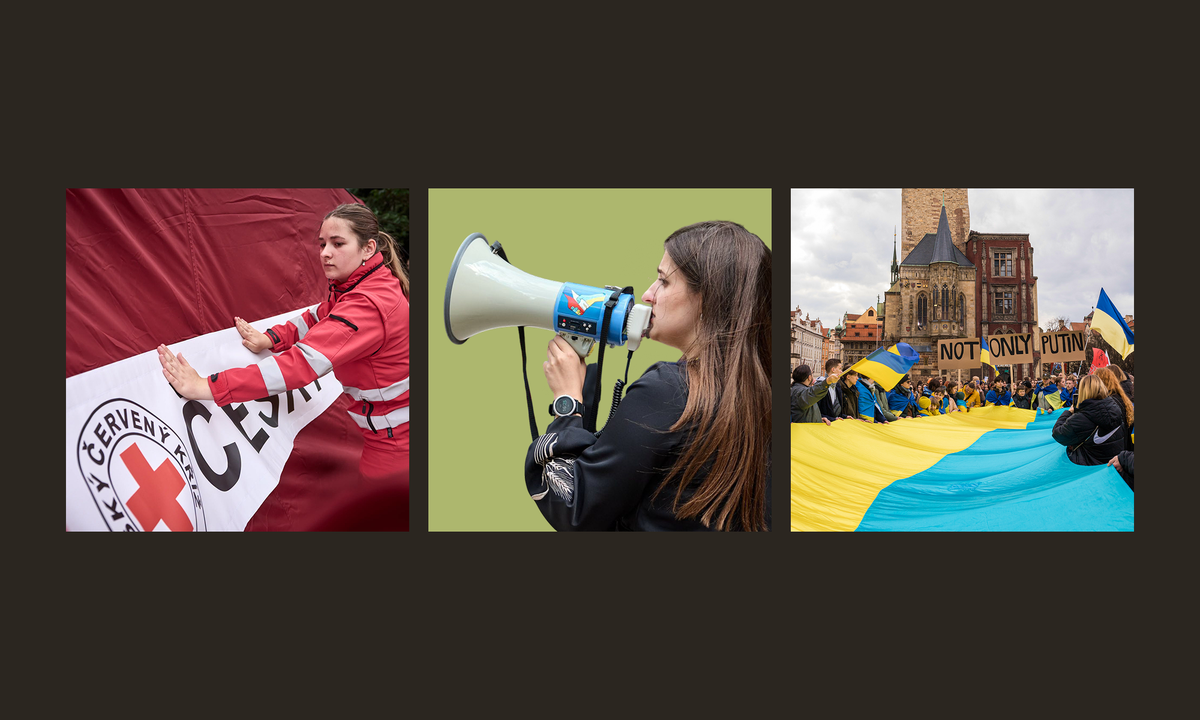
Ukrainians in Czechia know crisis calls for community. What if yours is in another country?
Go bags, alarming headlines and a Plan B: As Czechia urges residents to prepare for emergencies, how do you navigate the politicization of war, make sense of security threats and make informed decisions about your future?
Before Russia's full-scale invasion of Ukraine, Anastasiia Sihnaievska was more concerned about an upcoming promotion, her morning coffee, and getting to the gym than the possibility of war.
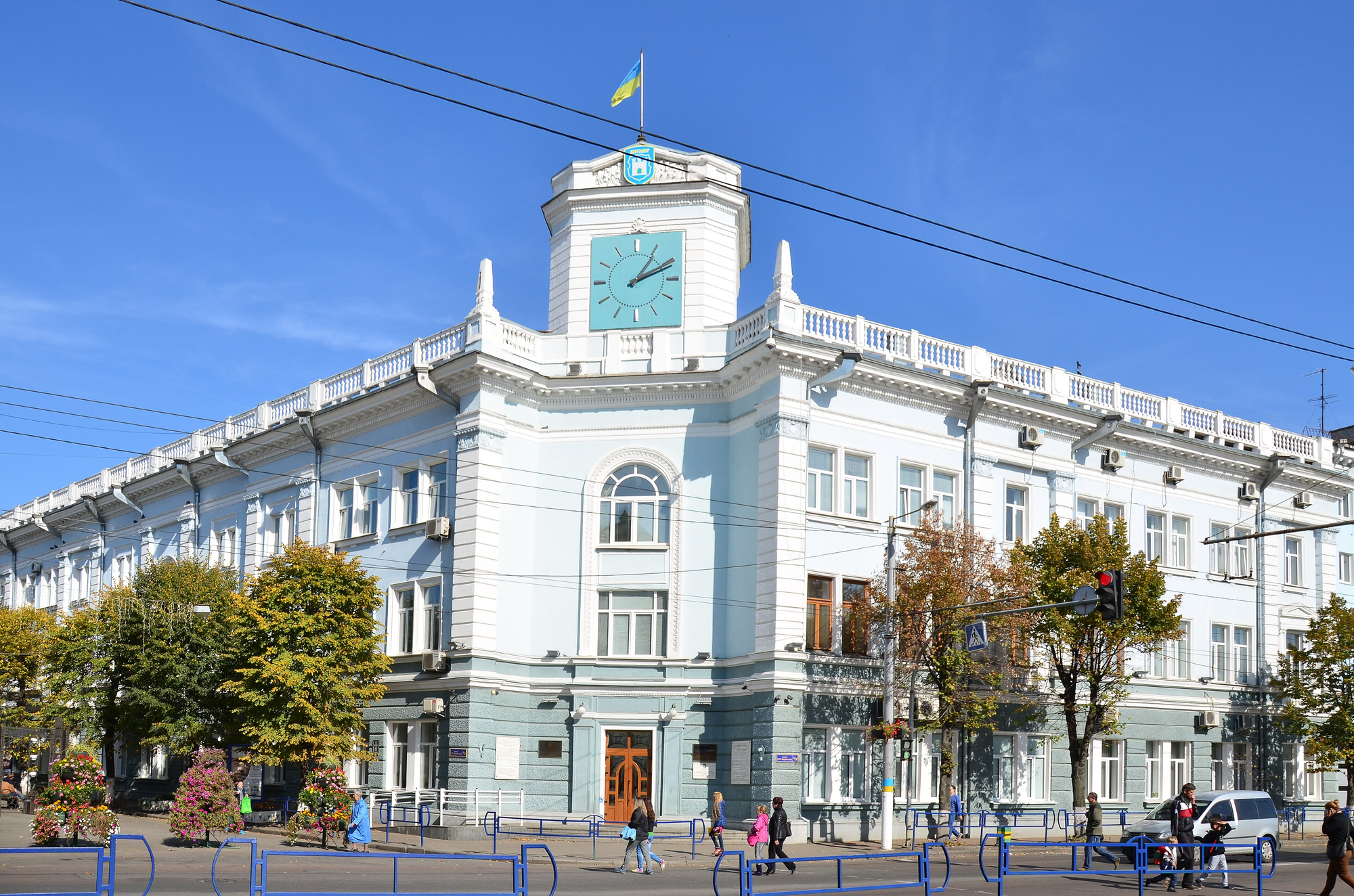
Across from her office in Zhytomyr, a shopping mall sold cappuccino for 26 hryvnias. She still remembers the price, and even the taste.
Not that there weren't warnings. Television broadcasts urged people to pack go bags and stock up on cash. By late 2021, her sister's school had been told by local authorities to prepare a bomb shelter. But the war was still happening somewhere else, in the Donbas, hundreds of kilometers away.
“We weren't necessarily ignoring the possibility of war,” she recalls. “We simply couldn't imagine the reality of what was coming.”
Nearly five years and one harrowing escape later, Sihnaievska lives in Prague, where she has helped build the kinds of community connections that could prove invaluable during a crisis.
Through Hlas Ukrajiny, the organization she co-founded, she connects Ukrainian volunteers with Czech civil society groups. She has also learned to navigate Czech news, official information and the competing claims that circulate when security threats make headlines.
Czechia, too, is asking residents to think more seriously about emergency preparedness.
In its latest annual report, Czech counterintelligence documented Russian influence operations, cyber threats and the continuing risk of sabotage. The European Union adopted a civilian preparedness strategy in 2025, while Czech authorities are urging households to keep enough supplies to manage 72 hours without electricity, water or other essential services.
Czechia is not Ukraine on the eve of Russia's 2022 invasion, and preparedness advice is not a prediction of war. But for people who have made their homes here, the changing security landscape raises questions that go well beyond stocking up for 72 hours.
What does it all mean for the future you've been building in Czechia, perhaps buying a home, raising children, or planning to spend the rest of your life here? How do you decide which threats to take seriously, whether you need a Plan B, and what that plan might look like?
And if those threats became real, would you know where to turn, whom to trust, and who might be there to help?
Czechia is building its helpers. Can they reach you?
Prague is developing a network of crisis volunteers who could help respond to major emergencies.
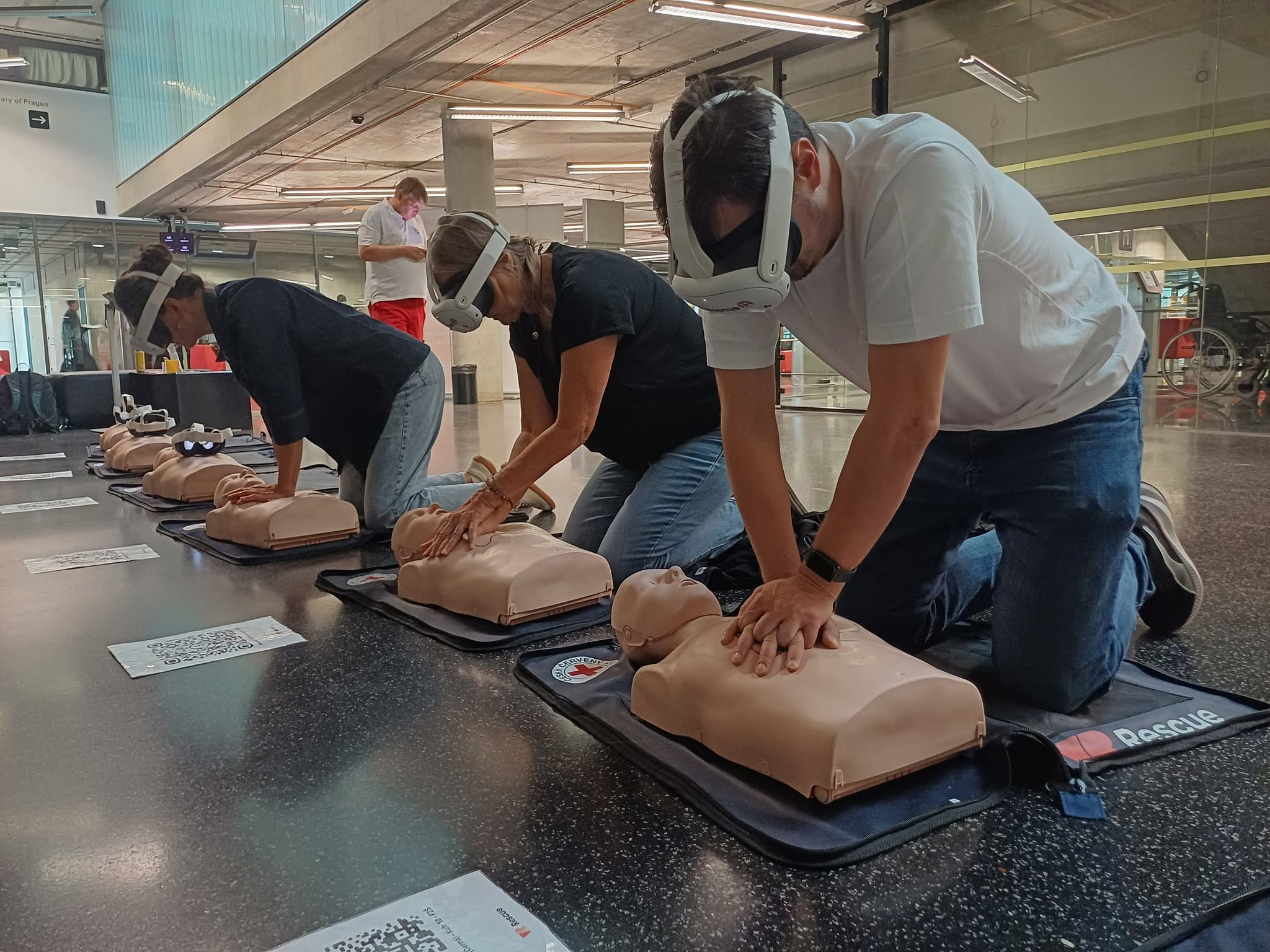
The initiative, called Pražský krizový dobrovolník, or Prague Crisis Volunteer, is run by the Prague 1 branch of the Czech Red Cross. During an exercise called Urban Patrol 2026, volunteers tested mobilization, coordination, and the collection of information from the field.
The program welcomes foreign nationals, including those who don't live in Prague, according to Richard Smejkal, the Red Cross's Head of Resilience & Preparedness.
But there is a practical obstacle.
“At present, the program operates primarily in Czech, including its public information, registration process, training and standard operational briefings,” Smejkal told Czechish in an email.
He acknowledges that this creates a barrier for people who don't speak Czech. Improving accessibility in English and Ukrainian is something the organization wants to address, although he cannot promise a timetable.
The challenge extends beyond translating registration forms. Volunteers responding to emergencies must understand their assignments, safety instructions, and operational briefings.
At the same time, Smejkal sees foreign-language skills as an important resource.
“From a humanitarian perspective, language or nationality should never determine whether someone receives help,” he says. “On the contrary, foreign language skills are particularly valuable to us during emergencies, as people who do not speak Czech fluently may be more vulnerable, especially when it comes to accessing essential information and assistance.”
Smejkal stresses that volunteers support emergency services rather than replace them.
Urban Patrol 2026 was not designed to test multilingual crisis communication.
The organization now wants to establish relationships with foreign-language communities in Prague and identify trusted contacts who can help information reach residents who might otherwise be difficult to contact.
“During emergencies, such as a major blackout, effective communication is just as important as the operational response itself,” Smejkal says.
“We need reliable channels through which information can reach different communities, but also channels through which those communities can communicate their needs and concerns back to us.”
Smejkal says building resilience means working with residential buildings, schools, and neighborhoods before an emergency occurs. The Red Cross is inviting individuals and community organizations to help establish those connections.
The headline test: Are you informed or just frightened?
Knowing where to go and whom to call in an emergency is one part of preparedness. Understanding the threats and finding information you can trust is another, particularly when the news might influence decisions about your future in Czechia.
A Prague-based journalist who has spent years reporting on Ukraine and Poland and spoke on condition of anonymity believes the public should be paying closer attention to Europe's security threats. He points to Russian sabotage, cyberattacks and disinformation as risks that deserve sustained attention, even without the immediate prospect of military conflict in Czechia.
His advice for following those developments: “Compare, contrast, corroborate.”
“Check as many sources reporting the story as possible, compare what they say and see where there's a contrast,” he says. “Make sure you corroborate as much information as possible to ensure it's factual; it's very easy to fall for disinformation.”
A recent Seznam Zprávy investigation illustrates why checking sources matters. It uncovered evidence linking Czech-language websites to a Russian disinformation operator and Chinese state-media networks.

For people who don't read Czech, he recommends translating local reporting rather than relying exclusively on English-language news.
“Start with Czech language news; just use Google Translate if you don't understand Czech. It's far too easy to fall into the expat bubble and not realize what's happening around you.”
For Sihnaievska, following the news has become part of assessing those risks. She stays in contact with family and friends in Ukraine, follows Ukrainian reporting and Telegram channels, and reads Czech outlets including ČT24, iROZHLAS, Deník N and Seznam Zprávy.
She pays attention to how journalists establish facts, distinguish reporting from opinion, and explain the context behind alarming developments.
“What matters to me is not whether a particular outlet always agrees with my views. I look for transparent sourcing, clear distinctions between facts and opinions, and journalists who are willing to provide context rather than simply repeat political statements.”
Sihnaievska also has a test for frightening headlines: do they help people understand what's happening, or leave them scared and helpless?
“Sometimes the facts themselves are frightening. That doesn't mean journalists should avoid reporting them,” she says. “The difference is whether they provide enough context for people to understand the situation or simply leave them feeling scared and helpless.”
What would your Plan B look like?
For people who have bought homes, started families or built careers in Czechia, the stakes are personal. Would you stay if the security situation deteriorated? Could you leave? And what would happen to the life you've built here?
Sarah Komasová, a security researcher at Charles University's Peace Research Center Prague and an analyst at STEM, says the answers depend on circumstances.
“It depends a lot on your personal situation: how familiar you are with the Czech context, whether you have family living here, for example parents or grandparents, whether you have kids, and what your financial situation is,” she says.
For those with the means, she suggests diversifying savings and investments rather than keeping everything in Czechia. Having access to somewhere outside a major city, even a cottage, might offer another option in certain circumstances.
Such choices are beyond the reach of many households. Komasová acknowledges that what people can do depends heavily on their financial resources and family circumstances.
She also observes that most people don't make extensive contingency plans. They carry on with their routines, even when the security environment changes.
“The psychological tendency is that people normalize even abnormal environments,” she says. “Even if you conducted this interview in Ukraine, people there would tell you they are trying to live normal lives, though the situation there is of course very different.”
Komasová's observation echoes Sihnaievska's experience before Russia's invasion: the warnings were there, but understanding what they might mean for her own future was another matter.
Yet Komasová cautions against approaching Czechia as though a security crisis were imminent.
She considers the country safe today, pointing to its strong position in international safety rankings, relatively low levels of violent crime and the protection offered by NATO membership.
She also recommends following official government information and the annual reports published by Czech intelligence services, rather than becoming consumed by every alarming headline.
“I would say we do not have a complete security guarantee that in 10 or 15 years the Czech Republic will be safe, in the big geographical picture,” she says. “There is danger, and we have to prepare for it.”
That means strengthening defenses and alliances, she argues. For individuals, it means considering their own circumstances without assuming that the worst is about to happen.
But what about the worst-case scenario, when a security threat is no longer something you read about in the news?
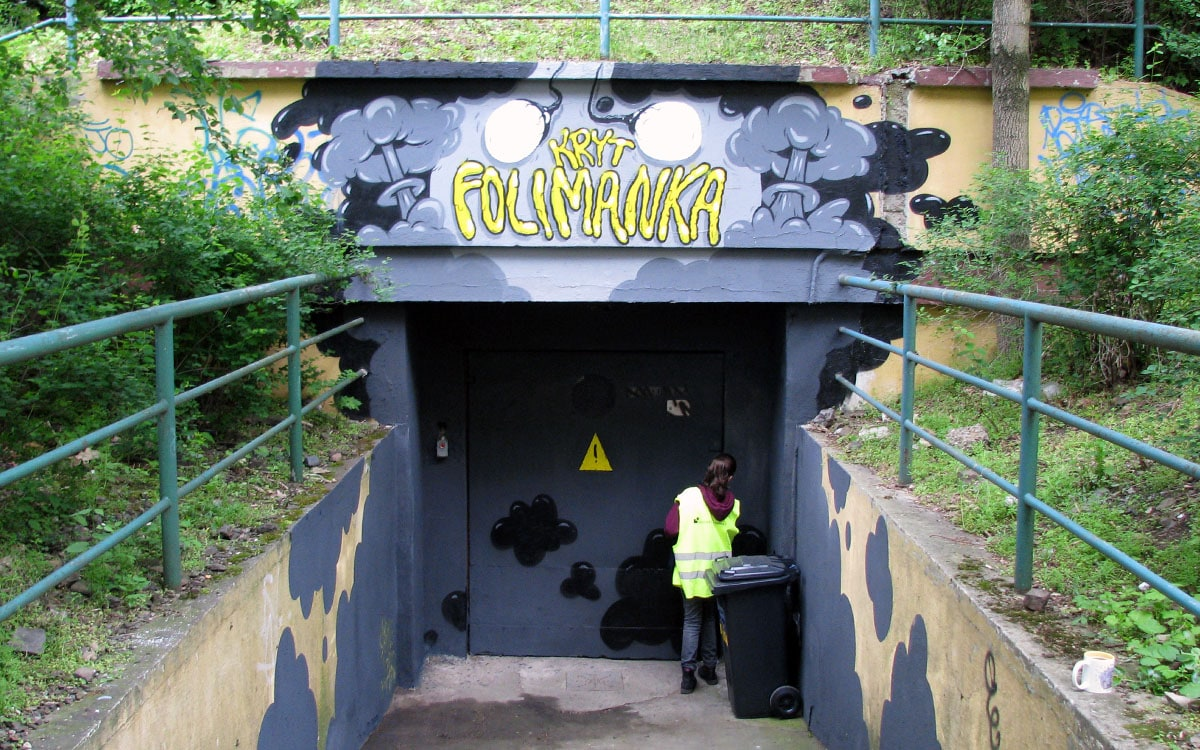
One practical resource is Kam se ukrýt, an independently developed app that helps residents find nearby civil-protection shelters and provides emergency guidance in Czech, English, Ukrainian, and Vietnamese. Drawing partly on lessons from Ukraine, it includes advice on what to do during an air raid, blackout or other emergency, with information available offline.
Komasová thinks people should know where their nearest shelter is, but sees little reason for residents of Czechia to monitor such information closely at present.
She also cautions that knowing where a shelter is doesn't mean you'll be able to reach it. If an attack comes without warning, seeking protection inside the nearest suitable building may be the better immediate response, consistent with Czech Fire Rescue Service guidance.
“I no longer see safety as something permanent”
For Anastasiia Sihnaievska, who has already lived through war, the question of safety has taken on a different meaning.
“As for my personal sense of safety, of course I feel physically safer in Prague than I did in Ukraine during the invasion,” she says. “But I no longer see safety as something permanent or guaranteed.”
She offers a surprising example. If people in Czechia regularly had to seek shelter from air attacks, she says she might consider returning to Ukraine.
“It might sound paradoxical, but in that scenario, I would probably consider Ukraine a safer place to be.”
“There is a huge difference between living in a country that has learned to function under constant attack and one that is only beginning to face such threats,” she says.
Follow the story: How to prepare and get involved
- Prepare for 72 hours: Czech government's emergency guidance
- Find shelter information: Kam se ukrýt and Czech Fire Rescue Service
- Help build community crisis networks: Contact the Prague 1 Czech Red Cross at prazsky.dobrovolnik@cckpraha1.cz
- Follow security developments: BIS annual reports and official government updates
Comments ()