
“There are some things I can't say in English”: A psychologist on language, ADHD, and therapy
When a child grows up speaking two languages, which one do they use to express fear, anger, or anxiety? Prague-based psychologist Desiree Gonzalo explains what parents should know about bilingual children, ADHD assessments, and finding the right language for therapy.
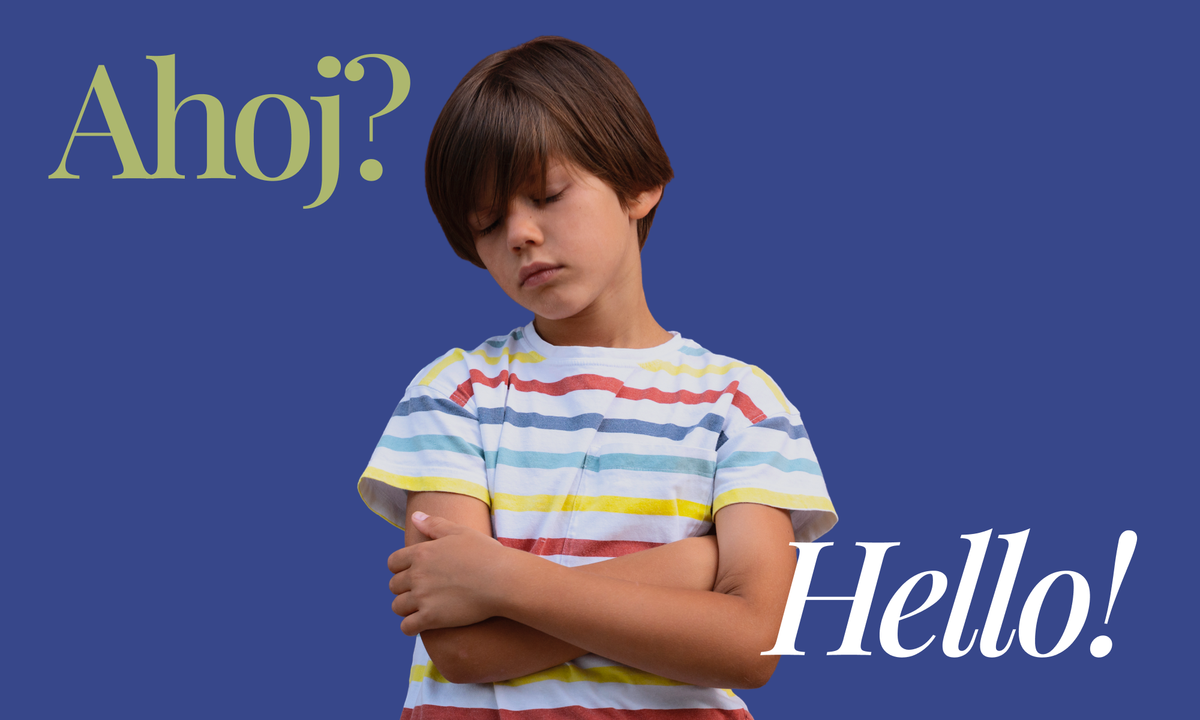
Raising a bilingual child can feel effortless when they're small. You talk to them, read to them, sing to them, and watch them move between languages with remarkable ease.
Then they get older. Language becomes the stuff of memories, friendships, jokes, embarrassment, and arguments.
I've seen this with my own daughters, who speak English and Czech. When one struggled with anxiety, she found it easier to discuss certain things in Czech. But my Czech wasn't good enough to explain what was happening at home to a therapist.
When my other daughter had trouble concentrating in class, I assumed English would be the obvious language for an assessment. But she told me, "There are some things I can't say in English."
That sentence has stayed with me.
Her words also made me wonder what happens when a child's emotional vocabulary, school language, and therapy language don't quite line up. And how can parents and psychologists tell when a child is struggling with language, attention, or both?
Finding a psychologist in Prague who understands the needs of bilingual children can be difficult. Even deciding which language to seek help in isn't straightforward.
I spoke to Dr. Désirée Gonzalo, a Prague-based clinical psychologist and psychotherapist, about how bilingual children express emotions, what ADHD assessments can miss, and how parents can find support in the language their child needs.
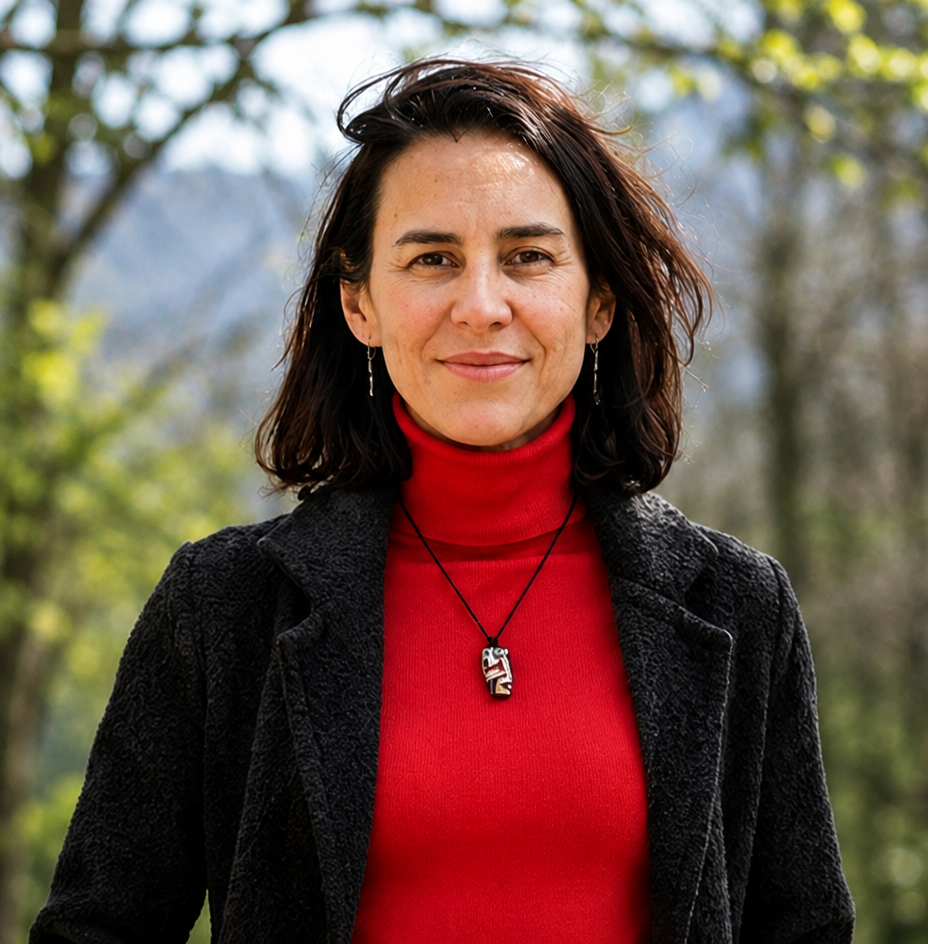
This interview was edited for clarity and length.
Can a bilingual child express different emotions in different languages?
Mostly, yes. Being bilingual doesn't mean having two complete sets of vocabulary in your head. You develop language in the contexts where you use it.
A child at a Czech-dominant school will build stronger academic and logical language in Czech, because that's what school trains. Emotional vocabulary usually comes from home, if you're lucky, and from the parent you feel closest to.
A bilingual person has different strengths in what they understand and can express in each language. And that changes with experience.
English is our family's common language, including when we argue. Could that affect how my daughters express difficult emotions in future relationships?
It means English becomes the language where they've gathered the vocabulary for volatile, high-stakes emotion. It's likely the one they'll feel most comfortable using at that level.
If they later end up in a relationship with someone who doesn't speak English, and things get stressful, they may struggle to express themselves or feel the urge to switch to English.
The earlier you start adapting, the more likely you are to expand your repertoire. Our brains are very plastic, especially when we're young. But it does make a difference.
My daughter and a Czech friend had a falling-out, but after they made up, they began speaking English together. My daughter told me, "We have more fun in English." Can changing languages change the emotional dynamic of a friendship?
My guess is that they have different roles in Czech and English, and found that English leads to more harmonious relating. But that's just my idea, so ask them.
Her answer is telling: in English, they have the tools to have fun together. In Czech, they might have the tools to be more argumentative and bite, with very harsh words.
When a child needs therapy, how do you decide which language they should use?
You can't assume the answer. Some people want to be as close as possible to their emotional core. Others want distance.
When I was in clinical training, my supervisor told me I should do my own therapy in Spanish, the language I was raised in, strictly. I said, "Hell no." That would have activated too much.
The American Psychological Association's guidance is to offer the client the language they prefer and the one best suited to the function of the treatment.
If you're working on ADHD skills, which language gets you into the substance of the treatment best? If you're doing deep emotional work, which language lets you do that most effectively?
My daughter chose to do cognitive behavioral therapy (CBT) in Czech because many of the difficulties she was working through arose at school, in Czech. Does the context in which a child experiences a problem influence which language works best for therapy?
Yes. CBT leans on mechanics: routines, identifying thoughts and behaviors, building new habits. It doesn't go deeply into emotions, so you have more flexibility in which language to use.
Other approaches, like the schema therapy I practice, are much more linguistically subtle. They deal with emotional experience, with nuance and with the different parts of yourself. There, language matters more.
Younger children still learning Czech may struggle to follow instructions, sit still, or participate in class. Sometimes that behavior could be mistaken for disobedience or a sign of a problem. What should teachers and parents be looking for instead?.
A lot depends on whether the school has an inclusive mindset. A child who suddenly arrives in a school where they don't speak the language may feel excluded, not just linguistically but because of different behavioral norms.
Temperament matters, too. Two children can go through the same experience. One may adapt more easily, while another feels overwhelmed or defeated.
Adults can play a huge role by looking beneath the behavior. Acting out is just the tip of the iceberg. We need to ask what the child needs that isn't being met.
When a bilingual child struggles to concentrate in a Czech classroom, how can parents and teachers tell whether they're bored, having difficulty with the language, or showing signs of ADHD? Can these things overlap?
You can't tell without asking the child what they're experiencing.
A child who is bored may lose concentration without having a persistent attention deficit. A child with ADHD may struggle to concentrate even when they're not bored. And a child can have difficulty with language without showing signs of inattention or hyperactivity.
These are different things, and we shouldn't assume they're necessarily connected.
What should a parent do when a teacher suggests their bilingual child might have ADHD?
Be curious. "That's interesting. What makes you think this?"
In that conversation, you and the teacher will both discover how valid the observation is. It might correspond to an ADHD profile, or it might just be a feeling.
Then it's for you to decide whether an assessment makes sense. And if the answer is no but the difficulties persist, who cares about the label? You still address the difficulties.
A child struggling to integrate may be experiencing real psychological discomfort.
If you do go for an assessment, the methodology in Czech and English should be similar: self-report instruments, parent input, and cognitive tests of executive functions. With bilingual kids, it makes sense to work with someone who has experience with bilingualism.
Sometimes a child has real difficulties but doesn't meet the diagnostic criteria. Then you deal with what you have and put together a package of support.
What happens if a bilingual child is assessed for ADHD or anxiety in a language they're less comfortable using?
It's crucial. Psychological tests, whether for cognition or mental health, are validated and normed in a particular cultural and linguistic context.
If a child has attended an English-language school all their life, assessing them using Czech-language materials could affect the results.
A good therapist should be curious here and never assume. They should have a conversation with the client to work out where their linguistic dominance lies.
What advice would you give parents raising bilingual children when they're going through a difficult time?
Look beyond language and ask what you're creating and what this person in front of you needs. Be curious. Don't interpret; ask.
When parents refer a minor to me, I often say: let's work with you first. You might be able to handle this, and if that isn't enough, maybe your child needs something else. Seeing a therapist about your child, without the child, is a great first step, and therapists in Prague can do it in English.
We put a lot of pressure on bilingual kids to speak the language the way we think they should. I try not to.
You're raising a bilingual son yourself. What's your experience?
I spoke Spanish to him, and he answered in Spanish until he started Czech kindergarten. Then he began answering me in Czech, while I continued speaking Spanish to him and teaching him English.
After a trip to Spain, he switched back to Spanish. But about a year and a half ago, he started answering me only in English. His comprehension of Spanish is still very good, but he's less fluent speaking it now because he doesn't practice as much.
Besides, teenagers now mix English words into Czech and even Czechify them, putting Czech verb endings on English roots. Some parents are horrified. I'm fine with it. That's how language evolves.
What's the biggest misunderstanding about bilingual children's emotional lives?
First, that what a child can express depends on whether they're using their dominant language for that area of life.
In the language where they developed their emotional vocabulary, you'll see one thing. In a different language, you might see a reduced version.
There is more to these kids than what you see in any one context. Their languages are not completely compartmentalized, but they're not perfect duplicates either.
Everything they can do in Czech, they can't necessarily do in English. Ideally, a psychologist could draw on both.
Second, and this is the basic misunderstanding: not being able to express an emotion doesn't mean you can't feel it.
At the level of feeling, bilingual kids are probably much like any other kids. The difference is in how they put it out into the world.
Parenting course: Deliberate Parenting
Dr. Désirée Gonzalo also offers a course called Záměrné rodičovství (Deliberate Parenting), which focuses on helping parents better understand and respond to their children's needs. The next course is provisionally planned for January in Czech, with English and Spanish versions potentially following in 2027.
For details, contact drdesireegonzalo@gmail.com.

Comments ()