
Come for low-stress Czech practice, stay for bábovka at Letná’s new living room
At Studánka, a community space in Prague 7, newcomers and longtime residents can practice Czech, meet their neighbors, or simply settle in for a chat. No perfect grammar required.
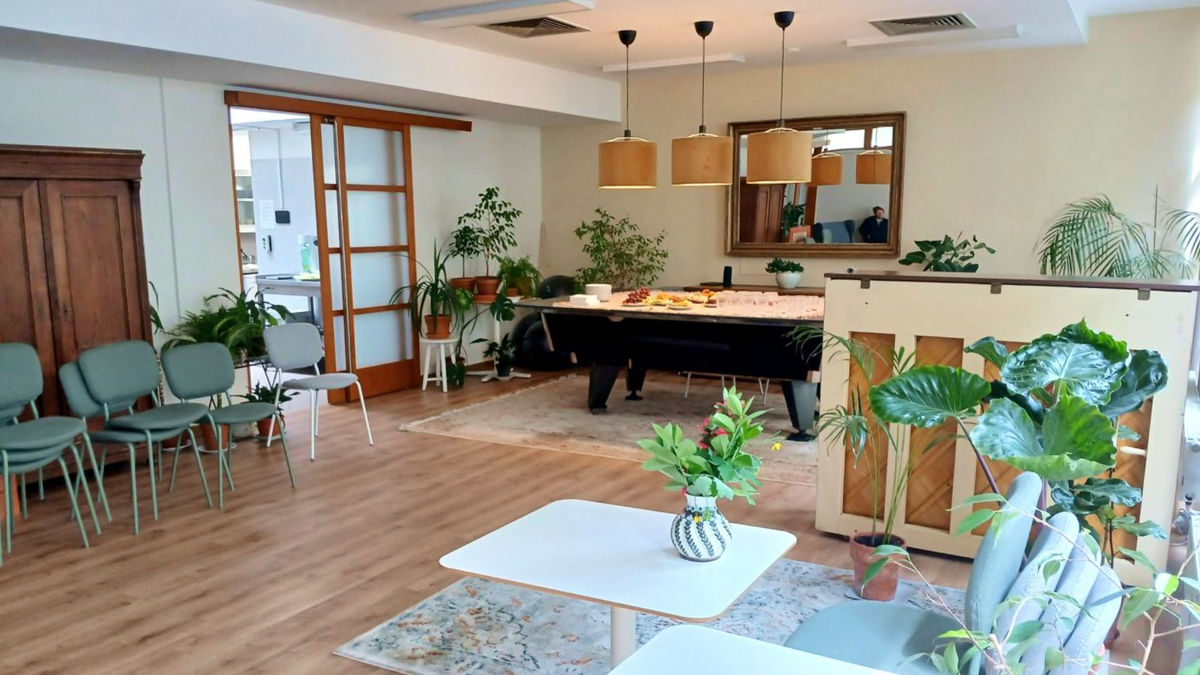
Come for a Czech conversation group, an Expat Café or tea and bábovka. At Studánka, a free neighborhood space in Prague 7, there's more than one way to meet people.
Two of the women at the table were named Valentina. Both were Ukrainian. There was also a Russian-American doctor, a Syrian mother, and me, a journalist who had traveled across Prague to check out a new community space with a big promise: getting non-native Czech speakers to let down their guard and speak.
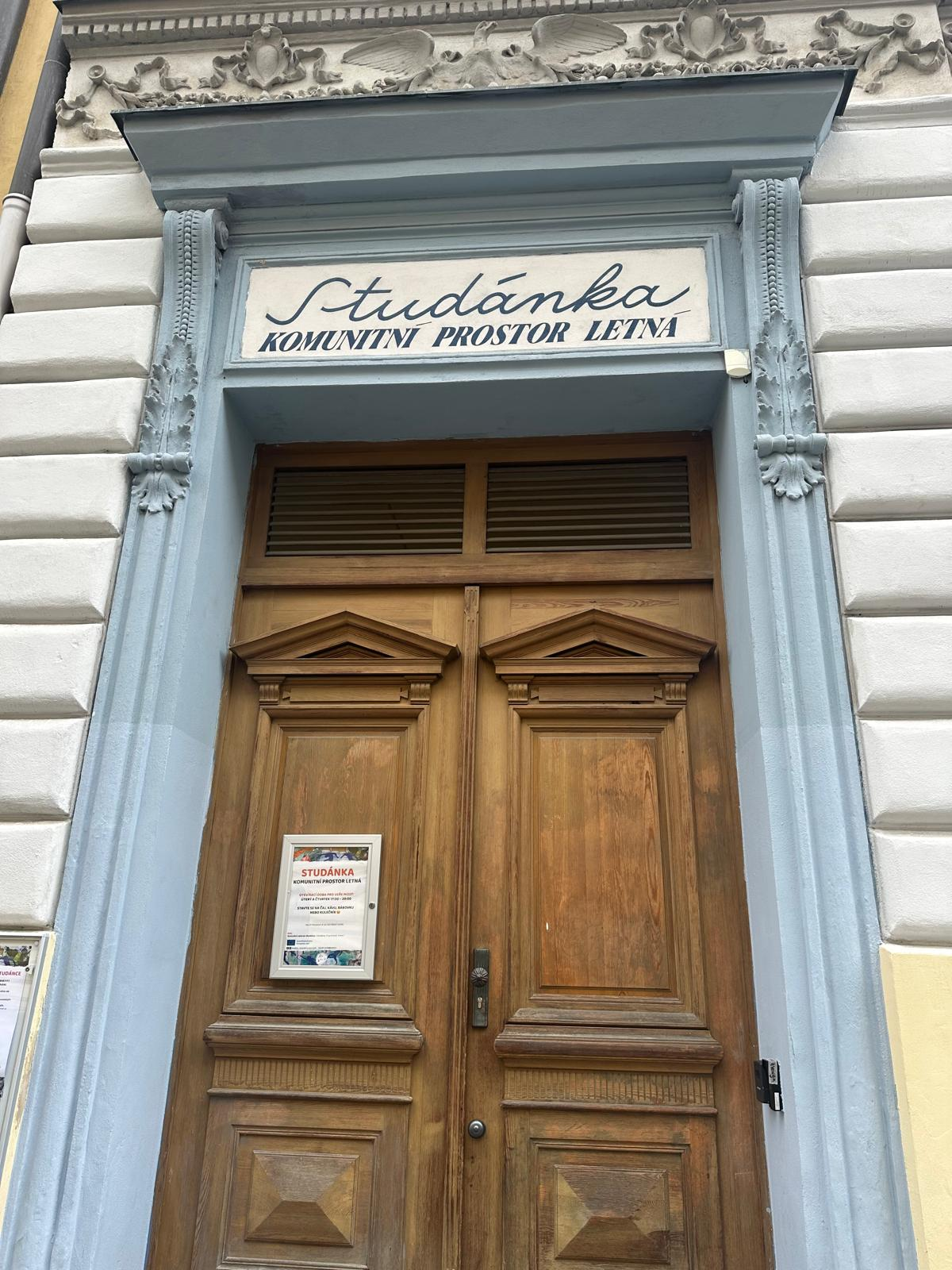
We had gathered at Studánka, a new community space in Letná where Mondays belong to language cafés, conversation groups and other activities organized by Diakonie Praha.
The sessions are designed to give people somewhere to practice Czech without buying a coffee or signing up for an expensive course.
And from what I heard around the table, where several participants had traveled some distance to get there, you don't even have to live in Prague 7 to join.
A neighborhood living room, with tea and bábovka
Studánka opened in May in the former dining room of a building with special-purpose apartments at U Studánky 15. The municipality renovated the space, while local organizations, volunteers and businesses contributed furnishings, equipment and activities.
Prague 7 Mayor Jan Čižinský described the thinking behind it at the opening: densely populated cities need places where people can spend time together without having to buy anything.
It's open to longtime Czech residents, newcomers, families and anyone looking for company.
More than 13,000 foreign citizens live in Prague 7, according to district figures. The language activities offer one way for them to meet people, but the program isn't limited to foreign residents.
Alongside its Czech conversation groups, Studánka hosts a dedicated Expat Café on Mondays, an informal gathering where locals and people from different countries can meet and make new contacts.
The result is a neighborhood living room with a flexible meeting space, a kitchen and a program that goes well beyond language practice.
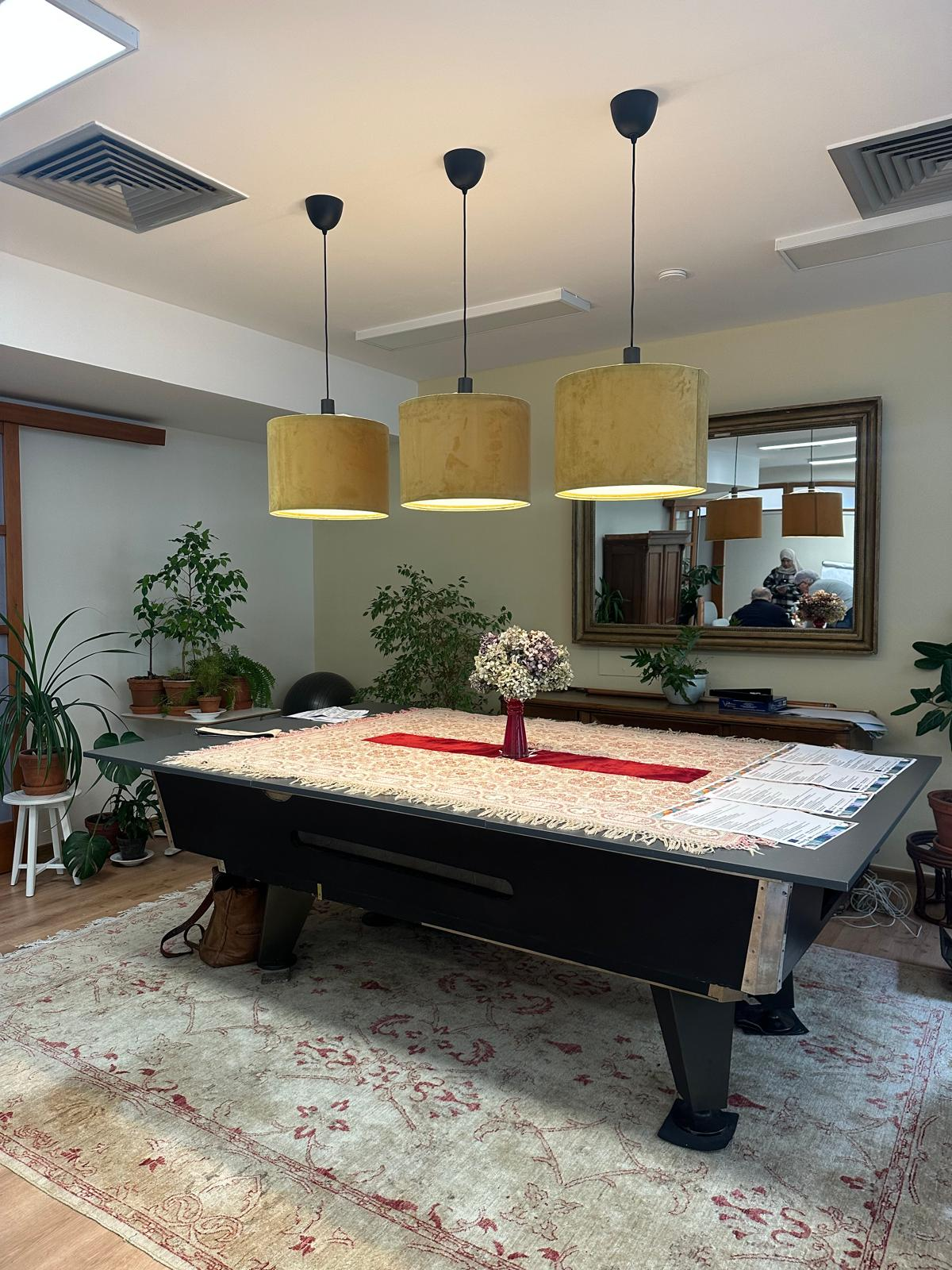
On selected Tuesdays, there's Tea and Bábovka, a free neighborhood get-together with tea, Czech cake and billiards. The November calendar also includes Greek dancing, film screenings, and practical advice on dealing with authorities. Some activities require Czech; others don't.
Getting people talking
Diakonie Praha's DOMA project has spent a decade helping newcomers settle in Czechia. Its services include counseling, assistance dealing with authorities, and psychological support in Ukrainian and Russian.
At Studánka, the invitation extends beyond people seeking assistance.
Petr Sobalík, DOMA's program manager, who also leads Czech conversation sessions at Studánka, points out that EU and non-EU citizens have different access to integration support. But he doesn't see those distinctions as a reason to exclude anyone from the gatherings.
“We are for everyone, so if someone from Poland would come, we wouldn't say, ‘we are not for you,’” he says.
Sobalík also wants Czech residents at the table. He believes integration should involve people getting to know their new neighbors, rather than leaving all the work of adapting to those who have arrived.
“From the beginning, we try to invite Czech people,” he says.
He believes the informal group setting offers something individual lessons can't.
“We realized that this group work is maybe better than individual, that people can support each other, that they can share information, and we facilitate the group,” he says.
“People say that they feel at home... it's not so formal,” he adds.
I got a taste of that myself.
My Czech was probably the worst at the table, which wasn't surprising considering I'd somehow ended up in the intermediate conversation group.
We took turns drawing cards with questions designed to get us talking. What's the one thing you always take on vacation?
Sobalík, an incredibly patient conversation leader, offered gentle corrections when needed. Nobody seemed particularly bothered by my mistakes. It was quiet, pleasant, and completely free. So why weren't there more people around the table?
The problem of getting people through the door
Sobalík acknowledges that reaching potential participants isn't easy.
His team has relied on Facebook and experimented with Meetup, where people searching for activities in an unfamiliar city might be more likely to discover a language group.
The results have been uneven. At one point, he recalled, several participants found the activities through Meetup. More recently, it has brought fewer newcomers.
“I would like to promote it more,” he says.
Studánka now has a dedicated website, making its activities easier to discover.
Our group was small, and the afternoon timing isn't particularly convenient for people working regular office hours.
The Russian-American doctor had written several books, spoke multiple languages, and had a busy schedule of speaking engagements. He was there because he wanted to practice Czech and spend time with people.
The Syrian woman had taken an active interest in helping others find their way in Prague. She listened carefully and vigorously took notes throughout our conversation.
And the two Valentinas? They had us laughing through a lengthy discussion of a chicken-and-apple recipe that I'm not sure anyone entirely understood, although we all agreed it sounded delicious.
Then there was me, an American who has lived in Prague for years and would never have thought a gathering like this was meant for someone like me.
Perhaps that's one problem with labels like expat, migrant, and integration. They can make us assume certain spaces or services are meant for somebody else, even when we might benefit from them.
I spend a great deal of time writing about the city, but the afternoon reminded me how easy it is to stay within familiar circles. People are doing interesting things all over Prague; finding them often means turning up somewhere unfamiliar.
At Studánka, you don't have to speak Czech well to join a conversation. You might find yourself sitting beside someone who is also trying, even if they've lived here for years or already speak several other languages.
I'd come to Studánka to find out what was happening there. I left having practiced my Czech, met some interesting people, and learned about a chicken recipe I might even try making.
Visit Studánka: U Studánky 15, Prague 7 (trams Letenské náměstí or Kamenická). The next free Czech meetups and Expat Cafés are on Mondays, November 16, 23, and 30: beginner Czech 10:00–11:30, Expat Café 11:30–13:30 and intermediate Czech 13:00–15:00.
Comments ()